
Grove
Grove · workspaces for AI coding agents
Run a forest of coding agents
Twenty agents, twenty isolated workspaces, and you never lose your place. Grove does not touch your agent. It owns everything around it, and every workspace reports to the ticket you filed.
Bring your agents
Shared team configuration
Isolated agent workspaces
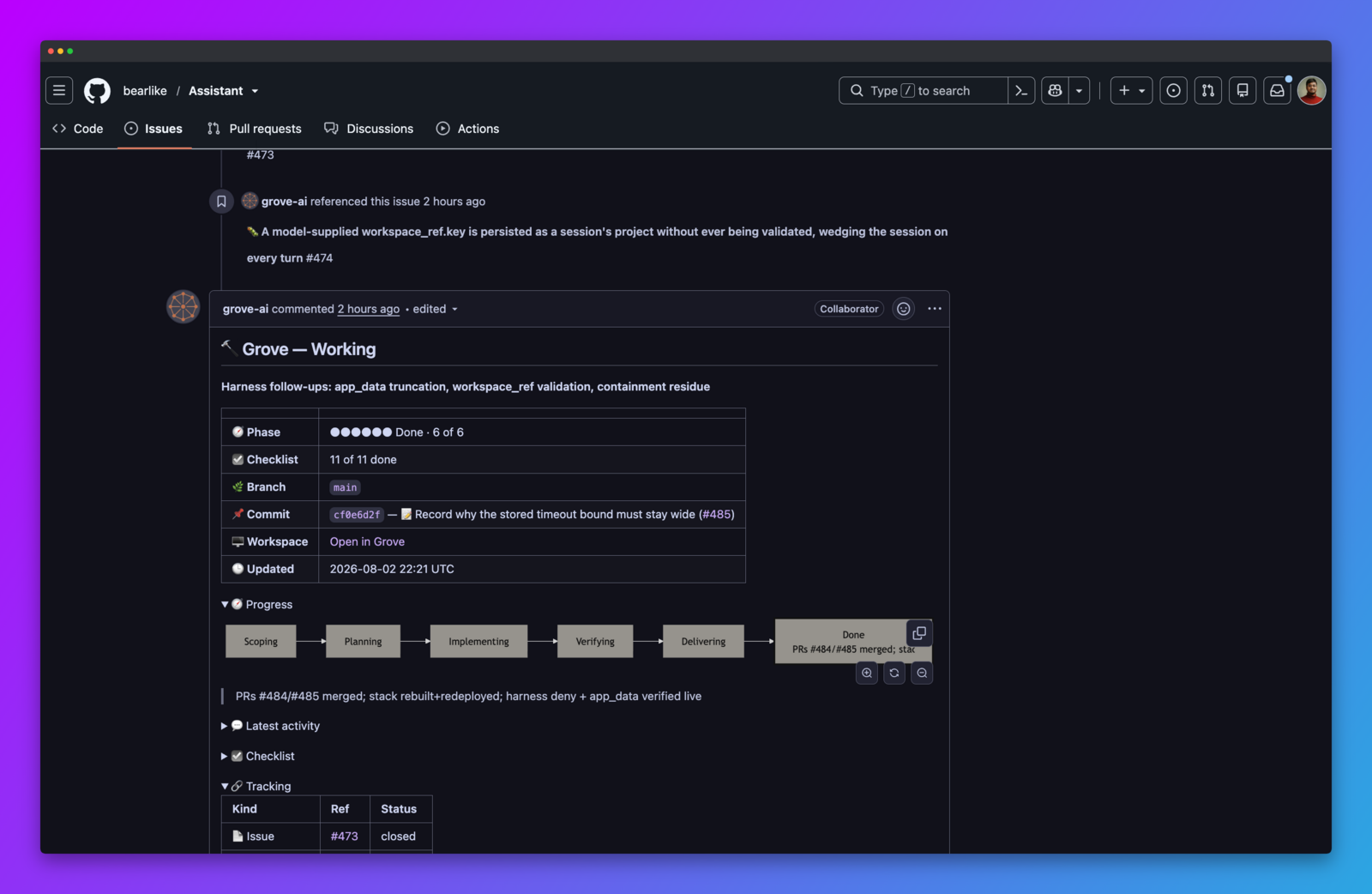
Issue driven workflows
Shared diagrams and annotations
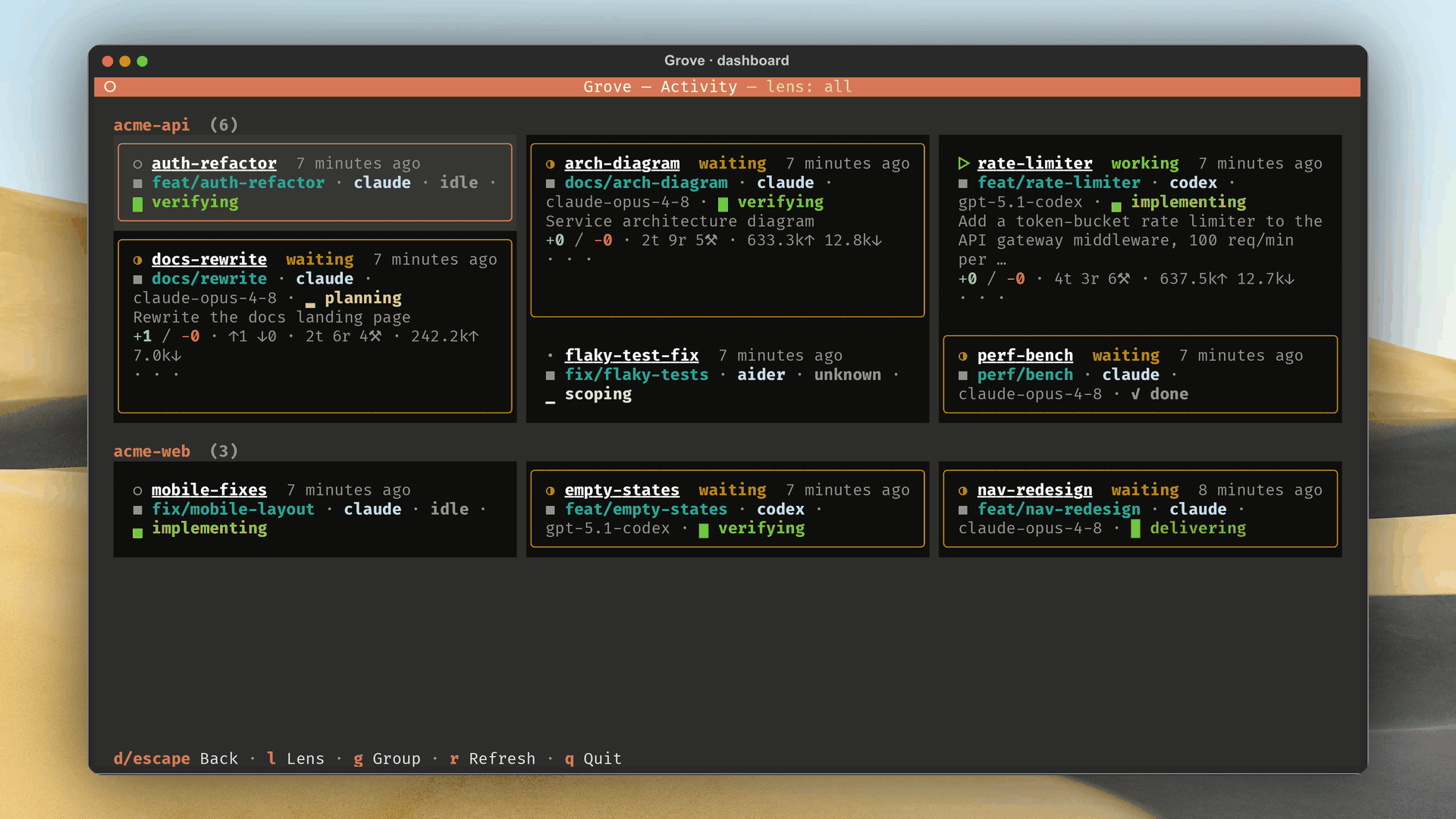
Agent activity monitoring
What is Grove?
- Writing the code stopped being the slow part. Deciding what to build did. More agents can build in parallel but shared checkouts cause conflicts and laptops limit capacity. Grove adds IDE tools around those agents without replacing them. It manages their workspaces and runtimes and gives you tools to guide their work.
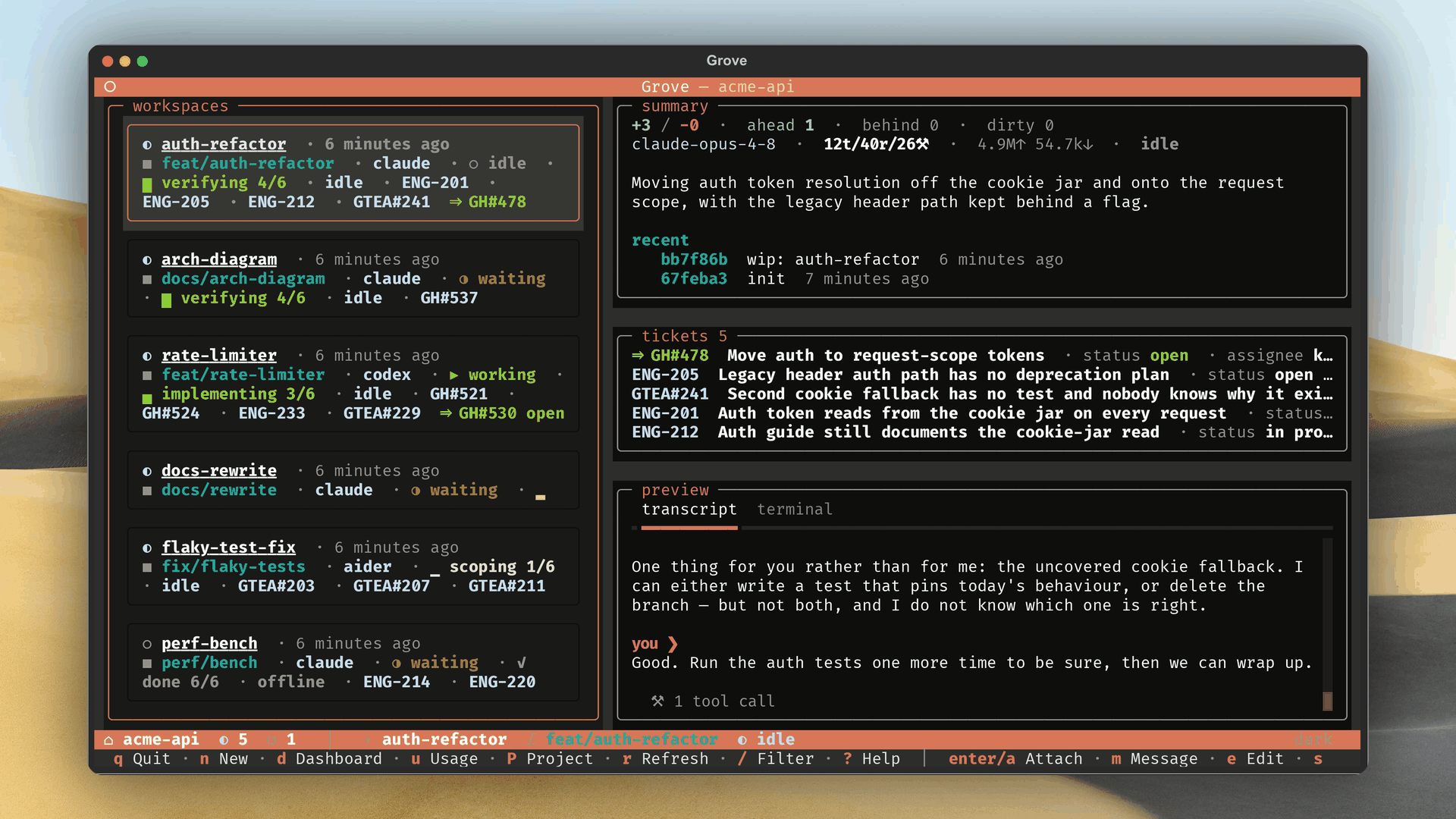
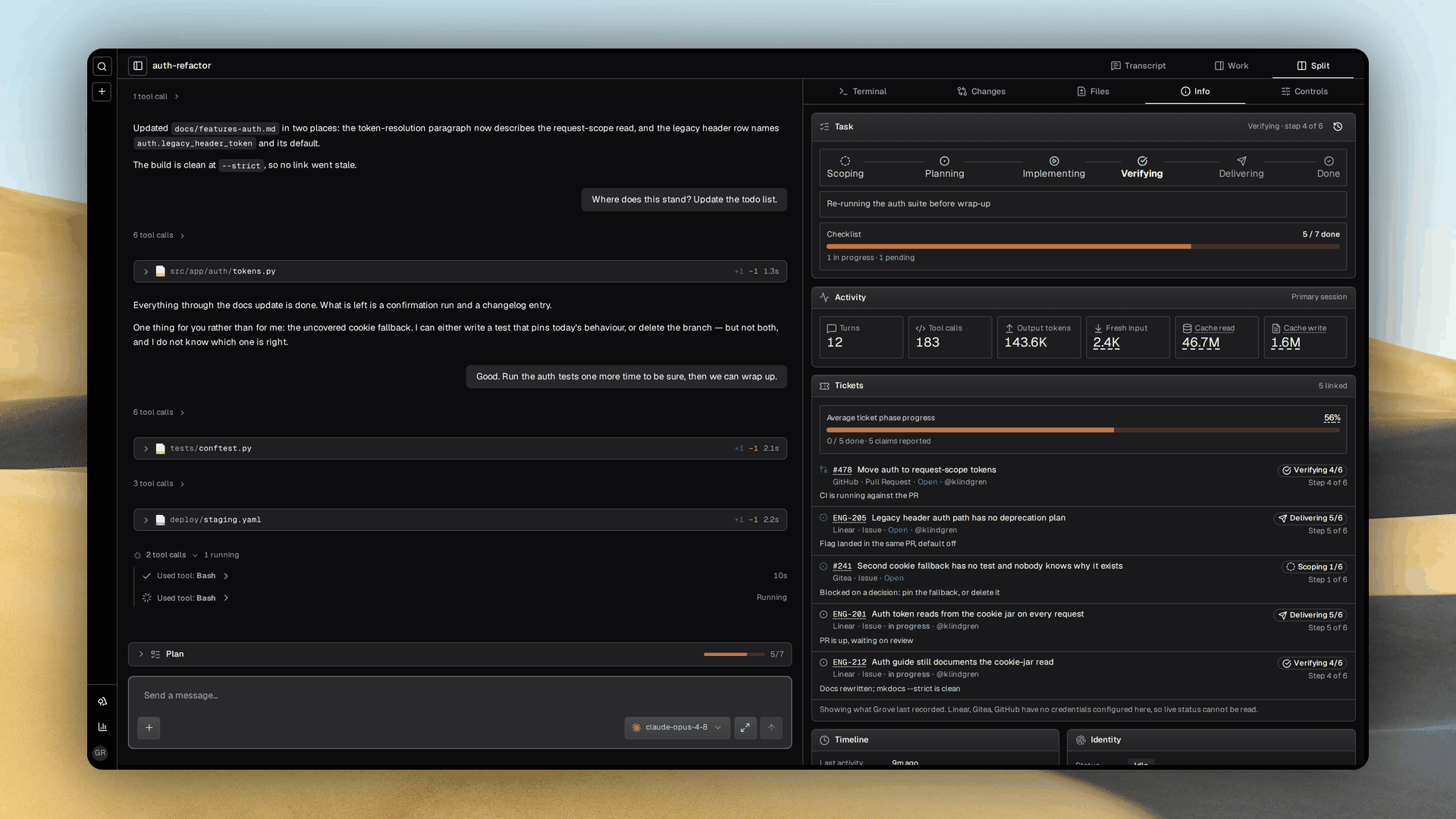
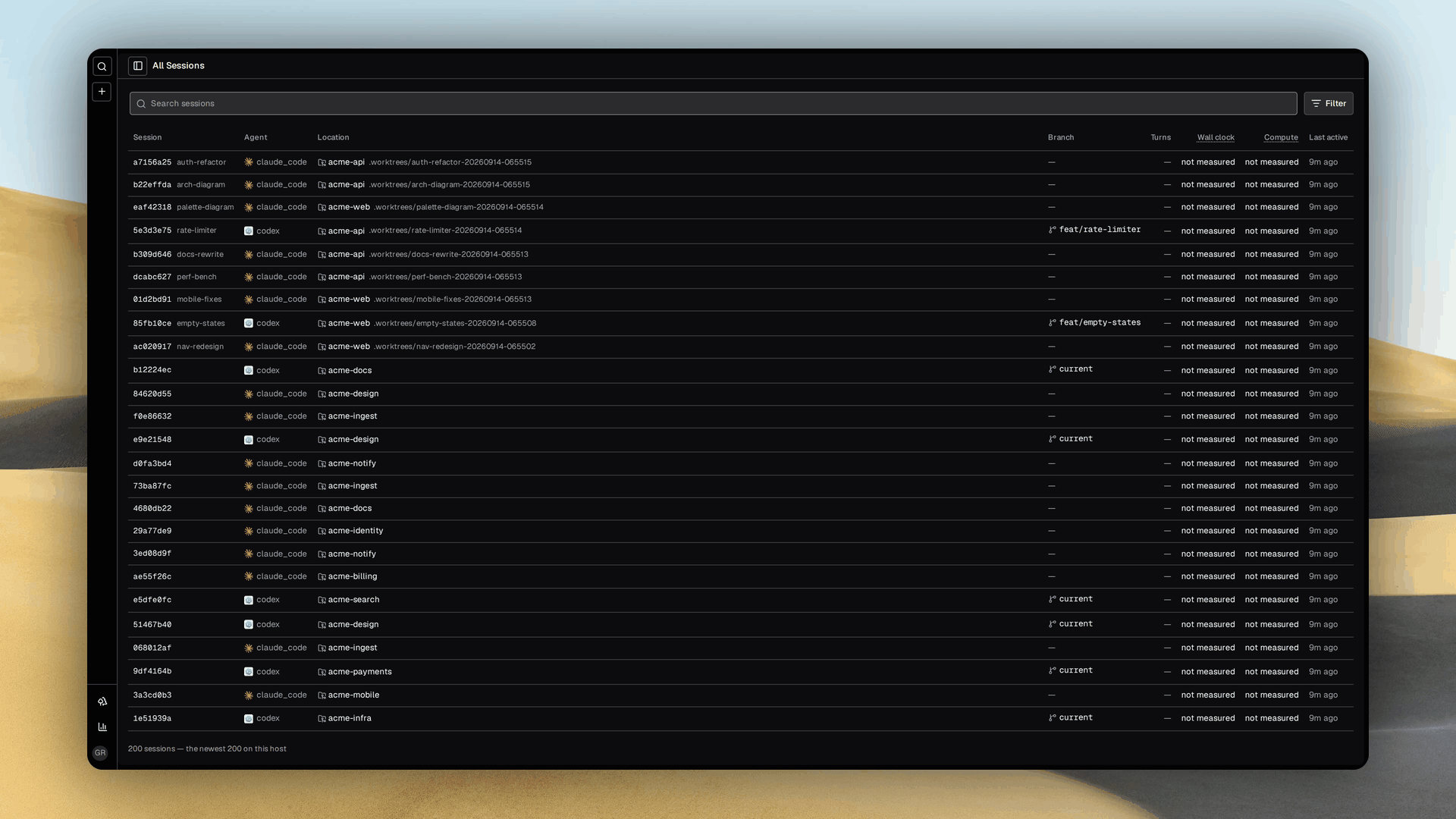
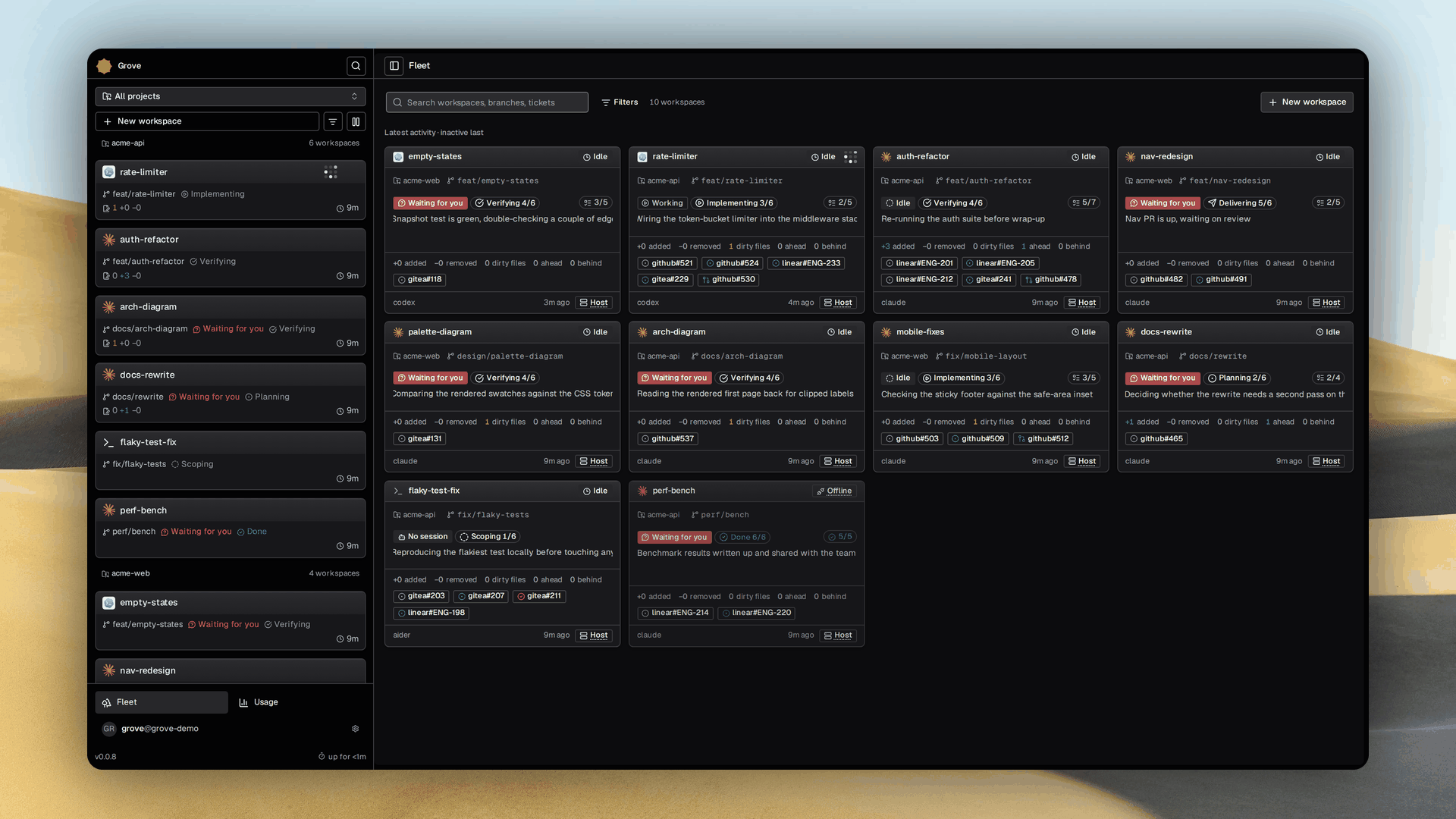
- Give each task its own workspace. Each agent gets its own worktree and branch in a separate window. Agents report progress phases for the workspace and each attached ticket independently. You can see what is being planned, built or verified across the fleet.
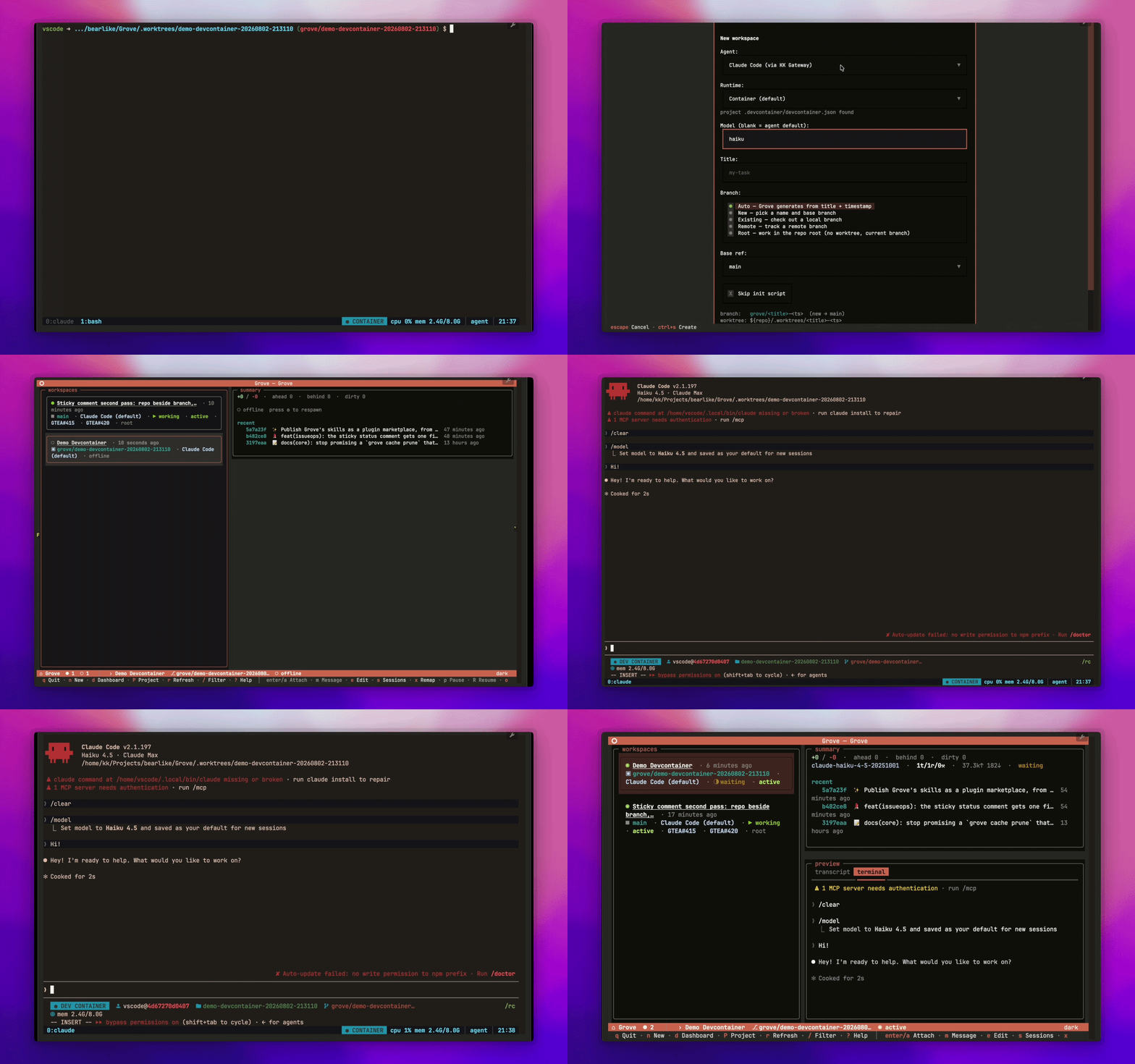
- Choose how each agent runs. Run agents on your host with the environment they normally inherit. Or use a container defined by your repository's
.devcontainer/. It provides separate services and ports with resource limits. Use that isolation for runs with agent permission checks disabled. - Choose where the work runs. Tests, builds and scripts compete for CPU and memory across concurrent workspaces. Move those workloads off your laptop when it slows down. Reuse the container configuration on a shared team machine or serverless cloud infrastructure.
- Let the tracker start the work. Assign an issue and Grove starts a workspace for it. Progress returns to the same ticket. Follow the task where you defined it.
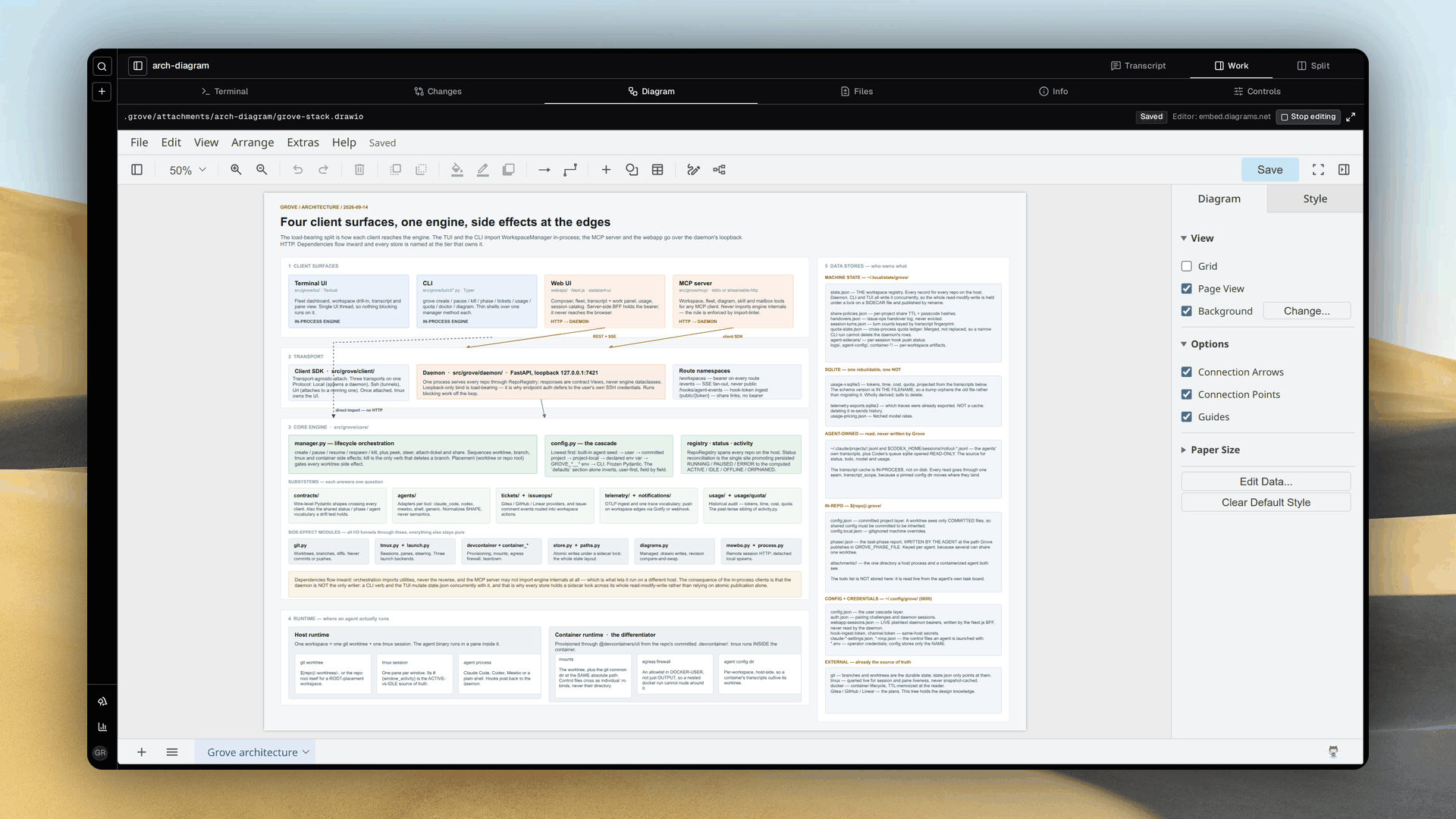
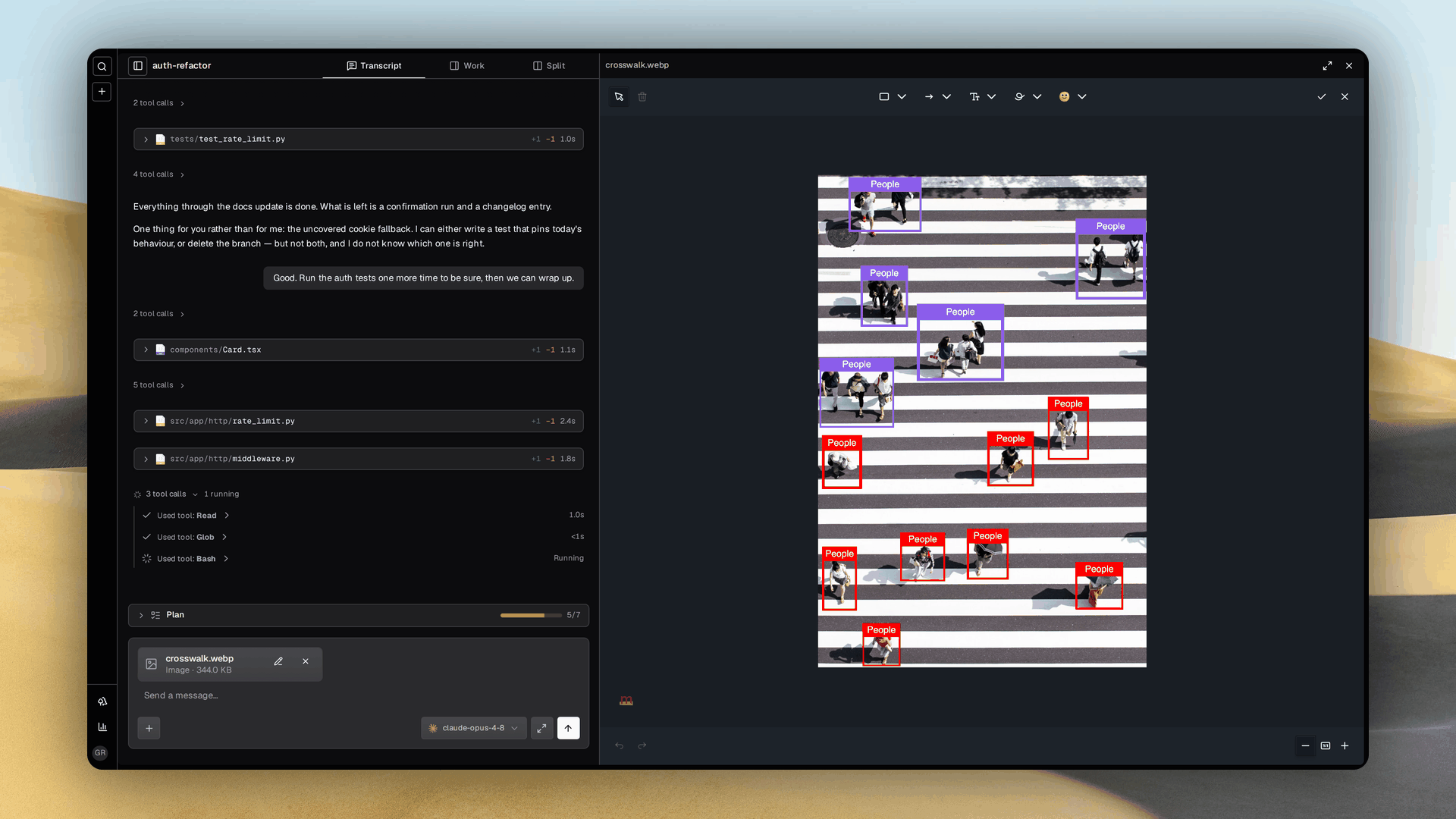
- Show it instead of describing it. Mark up a screenshot or collaborate with the agent on a diagram. Approve the diagram or mockup and attach it to a ticket. Then coordinate your fleet around it.
Choose your surface
Every workspace is reachable from all four.
Terminal
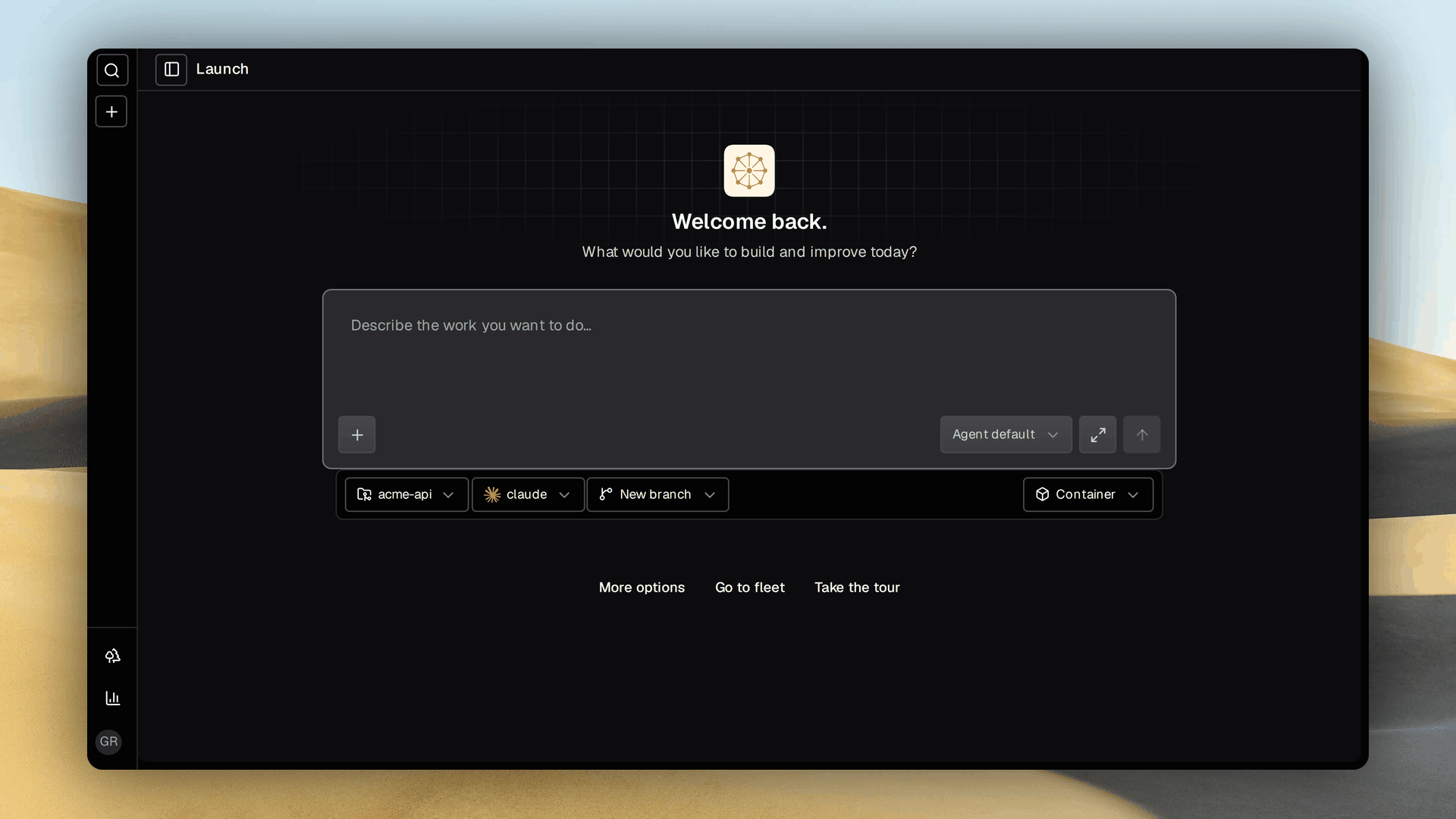
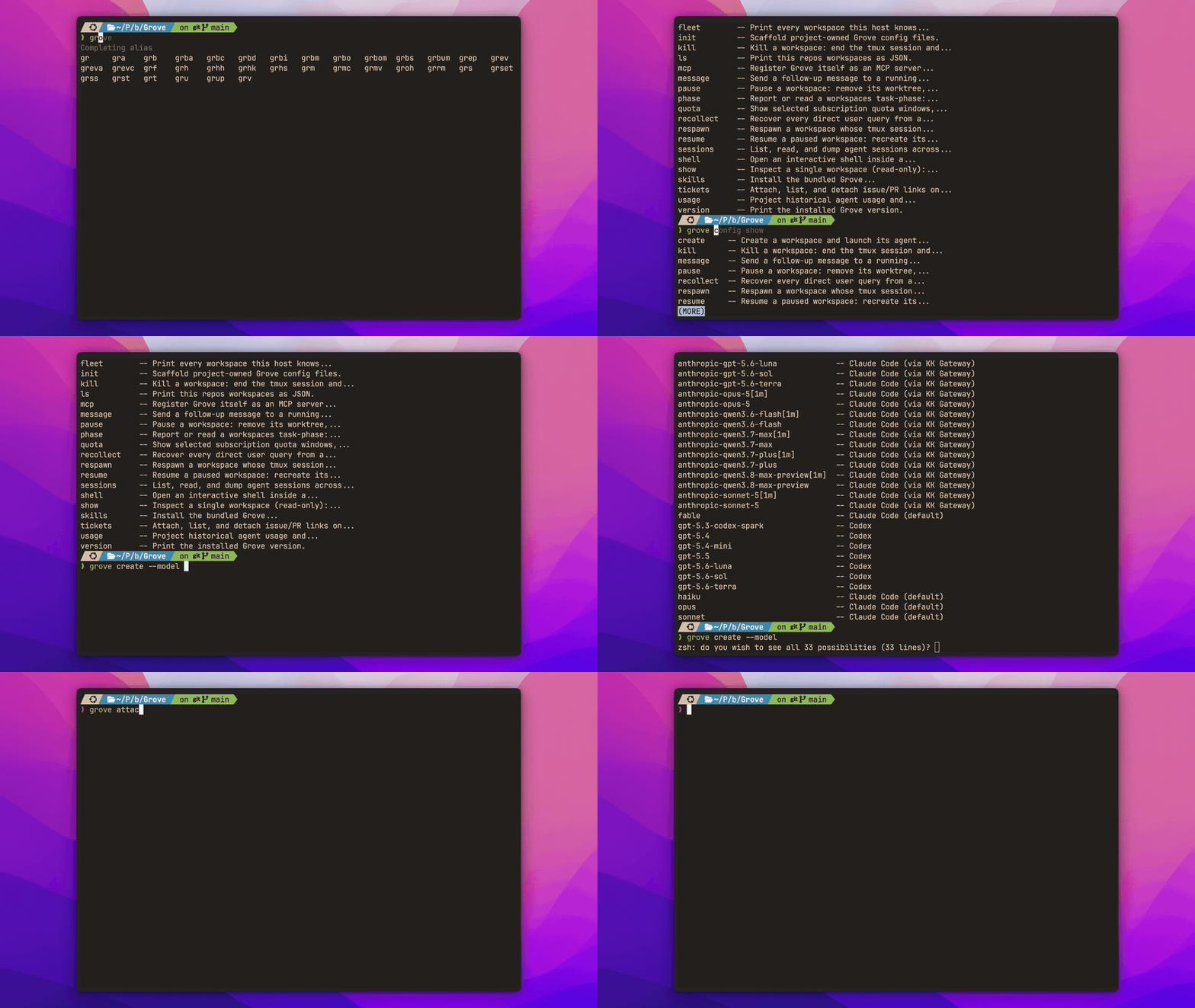
Manage multiple coding agents without leaving your terminal. Switch between workspaces and inspect live output to see which agent needs you.
Web dashboard
Manage your agents from any device and track their transcripts and task progress. Review diagrams and annotate screenshots to show what needs changing.
Your tracker
Delegate work from Linear, GitHub or Gitea without opening another tool. Assign an issue to start a workspace and follow its phase and checklist on the same ticket.
Another agent
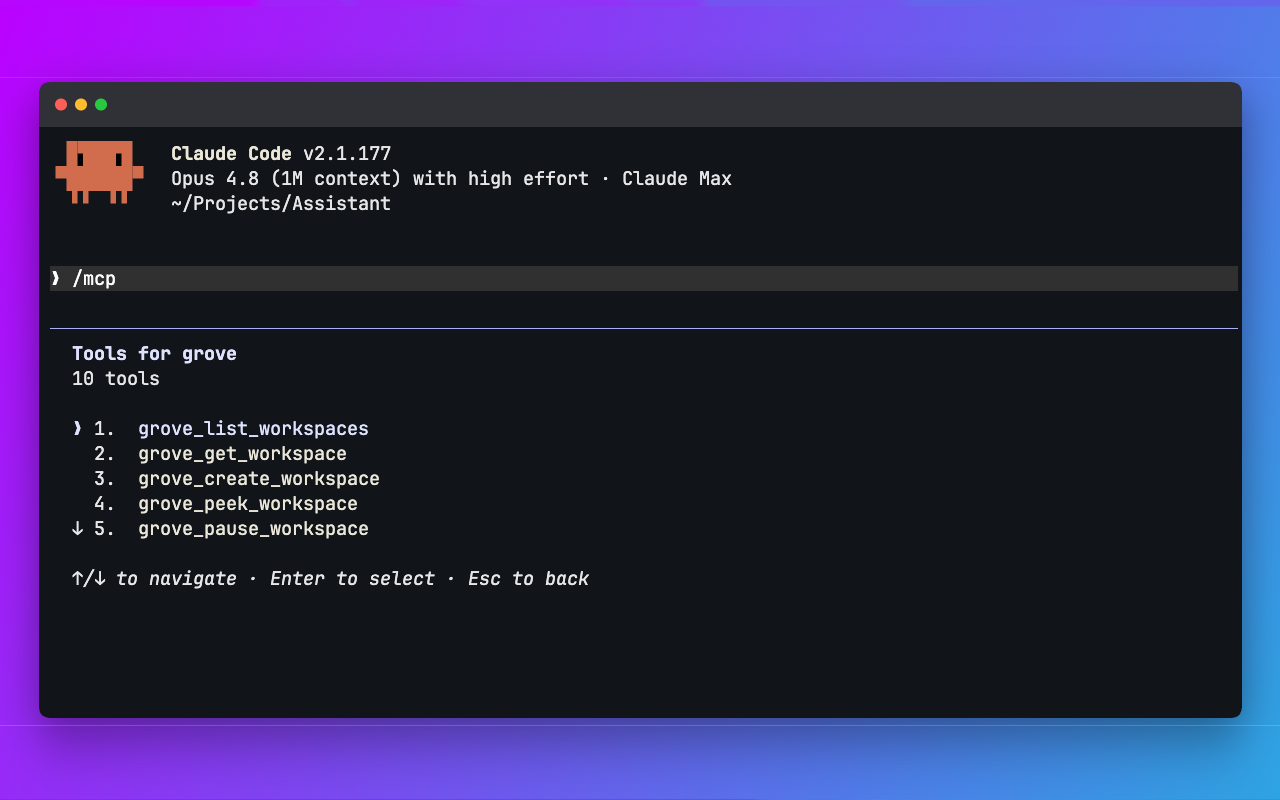
Give an orchestrating agent the tools to delegate across isolated workspaces. Through MCP it can launch agents, inspect their progress and send follow ups while you retain oversight.
What you get
Shared configuration
A committed
.grove/config.json carries the agents, models, setup and container policy every workspace starts from. Each engineer overrides locally, and a workspace picks its own model without touching the shared file.
Agent monitoring
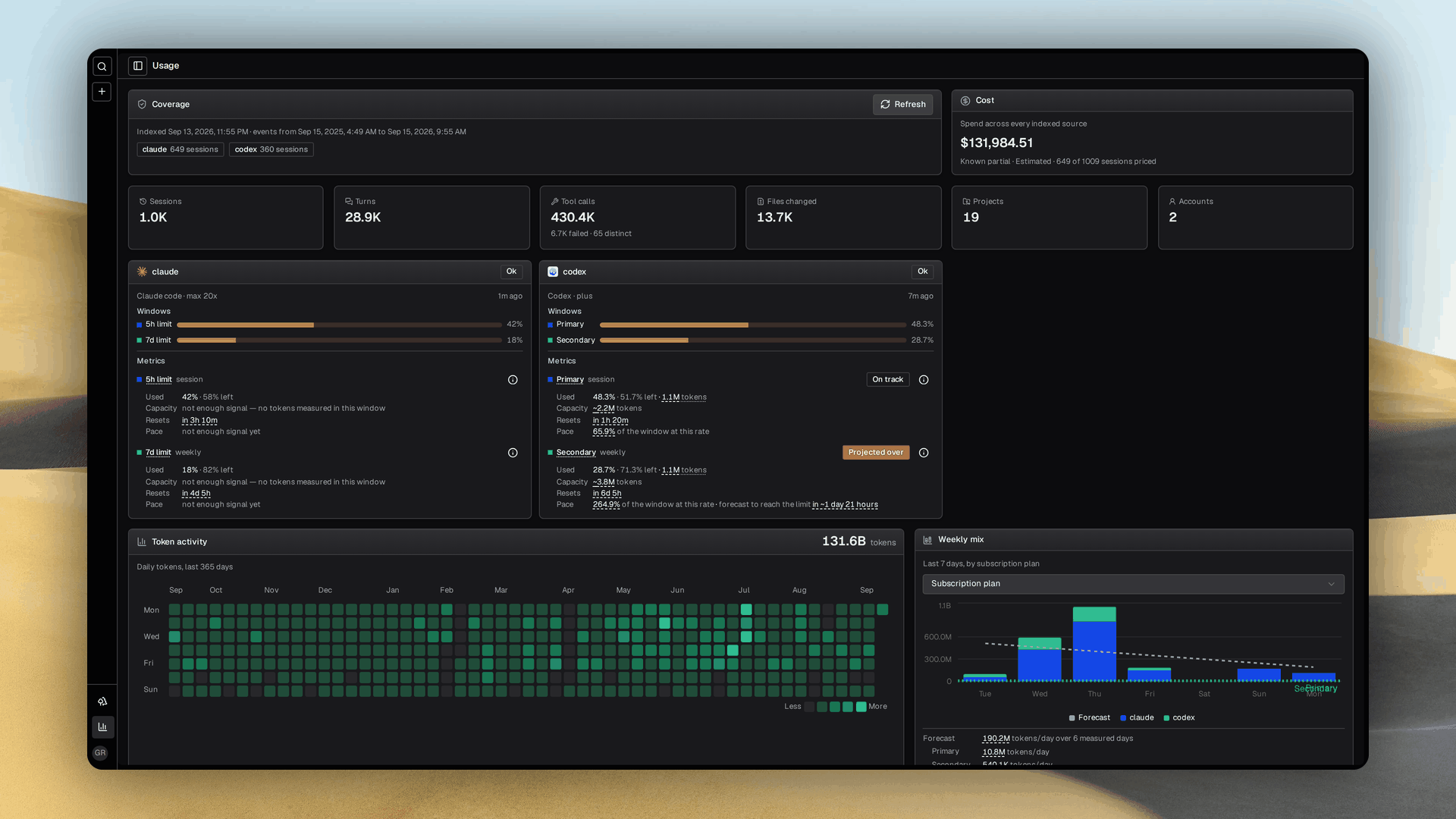
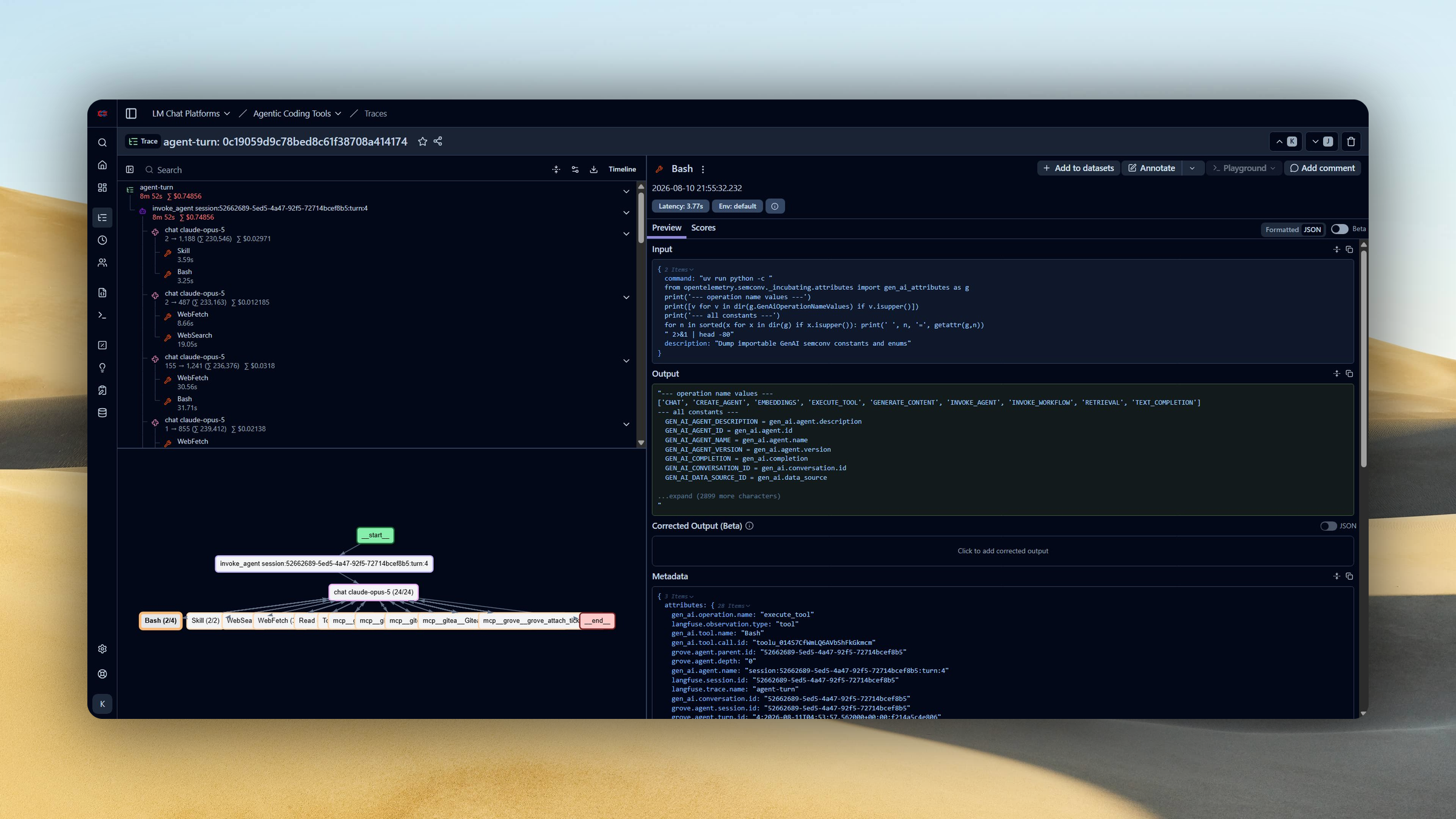
Every turn becomes one trace with its model calls, tool calls, latency and cost, in Langfuse or any OTLP backend. Usage, subscription windows and a year of spend come from transcripts on your own disk.
Isolated containers
Each agent runs in the repository's own devcontainer with resource and egress ceilings, so permissions off is safe and twenty agents cannot saturate one machine. Sessions survive restarts and re-adopt on their own.
Shared diagrams
A UI mockup or an architecture spec lives as one draw.io file both of you edit, with revision checks. Grove validates the XML and you approve the picture before code exists.
Image annotation
Drop a screenshot or a file into either composer, draw on the image, and the agent is handed a path inside its own worktree. The day to day handoffs your agent harness leaves out.
Remote access
The same fleet from a terminal, a browser on any device, a tracker comment, or another agent over MCP. One daemon on loopback, a pairing handshake, and push notifications when an agent needs you.
From first workspace to a whole fleet
Start with one agent, share your setup with the team and choose how you manage the work.
Install
Set up Grove and launch your first isolated workspace.
Configure
Choose your agents and share workspace defaults across the team.
Use
Run your fleet and follow its work from the surface that suits you.
Capabilities
Contain each agent's environment and make its work easier to review.
Developers
Build on Grove's public API or contribute to the engine and its clients.